It was only back in June that Android 16 delivered a raft of new features for Google’s operating system, but the company just announced another bumper package of updates, including more customization options, better parental controls, and smart notifications.
You can now create custom icon shapes, cohesive themes, and extend dark mode to apps that don’t have their own dark theme. The overhauled parental controls let you manage screen time, downtime, app usage, and rewards directly on your kid’s devices, while AI-powered notification summaries give you a TL;DR of long messages or group chats. Related notifications are also now grouped, and lower-priority notifications, like promotions, are silenced.
There are nifty new accessibility features too. Expressive Captions now have the relevant emotion tags, and they’re rolling out in English-speaking YouTube videos as well as across Android. Configurable AutoClick for mouse users reduces strain, Guided Frame is now more descriptive about what’s in the camera’s view on the Pixel camera app, and you can launch Voice Access with a voice command to Gemini. Fast Pair for hearing aids is also expanding (now available for Demant, Starkey support coming in early 2026), and better voice dictation with TalkBack is coming soon. These features are coming to Pixel devices first, but will follow to third-party devices in time.
Google is also showing some love to older versions of Android, with features that aren’t 16-specific, such as Emoji Kitchen stickers, the ability to leave and report group chats in Google Messages, the option to check for scams with Circle to Search, and pinned tabs in Chrome just like on desktop. My favorite new feature is Call Reason, which enables you to flag your call to any saved contact as “urgent.” —Simon Hill
The Long-Awaited Sony A7 V Is Here

Courtesy of Sony
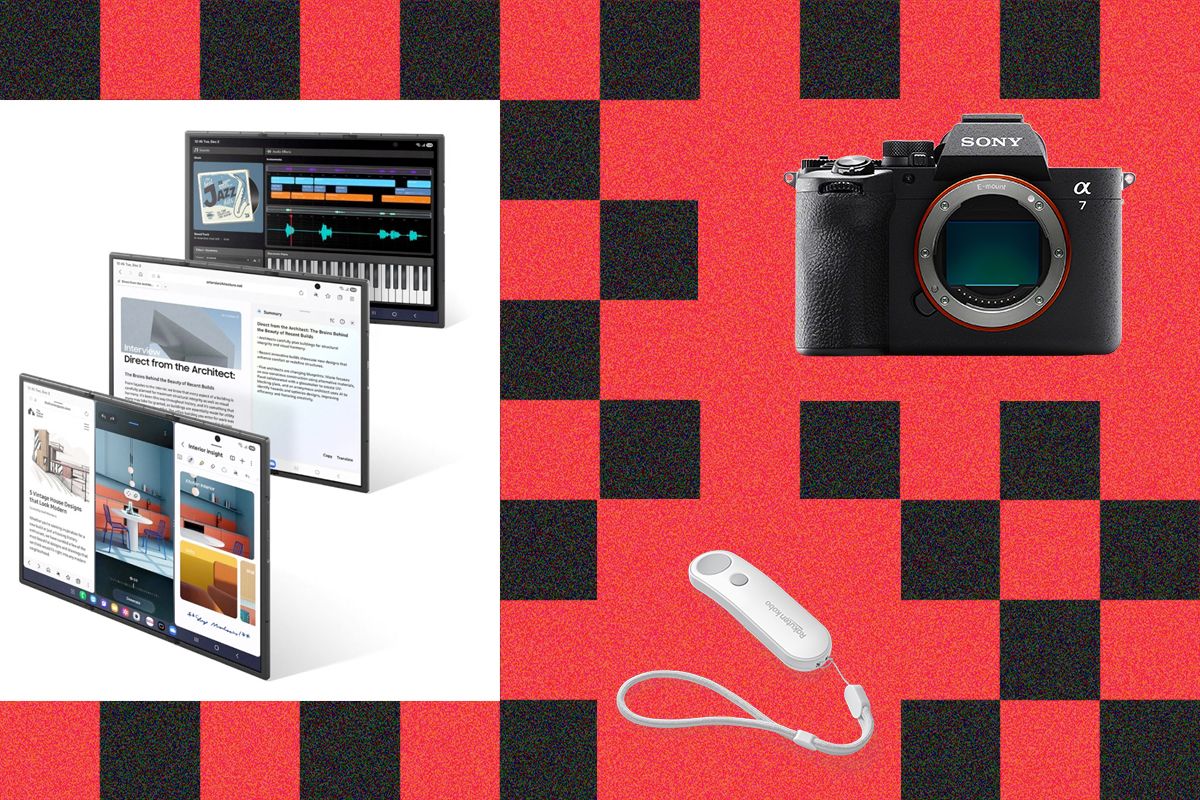
Sony has released the A7 V, an upgrade to the prosumer full-frame Alpha 7 camera. The mark 5 version of the A7 brings a new 33-MP partially stacked CMOS sensor and the BIONZ XR2 processor, which brings the AI processing unit into the processor. Also notably improved in this update is the In-Body Image Stabilization (IBIS), which is now up to 7.5 stops. There are 16 stops of dynamic range, 30-fps shooting with full autofocus, and Sony’s remarkably good AI subject and eye detection as well.
While the A7 series skews toward the still-photo shooter, there are some video improvements worth noting, include 7K oversampled 4K/60-fps full-frame recording. There’s also 4K/120 fps available in Super 35-mm mode (APS-C). Alas, there’s no open gate recording here. That’s reserved for the high-end flagships like the A1.
I’ve had a chance to test out the A7 V for a few days, and so far the outstanding feature is the autofocus, which is by far the most accurate system I’ve ever used in a camera at this price. The low-light possibilities of 7.5-stop IBIS are also impressive. The Sony A7 V will be available at the end of December for $2,899. You can preorder today at Adorama and B&H Photo. —Scott Gilbertson
Samsung’s Galaxy Z TriFold Goes From Phone to 10-Inch Tablet

Even the best folding phones right now only have a single fold, mostly going from regular phone size to a 7- or 8-inch tablet, but Samsung is about to unfurl its Galaxy Z TriFold in the US. Despite the name, it has two folds, but that lets you go from a regular (but pretty thick) phone to a whopping 10-inch tablet that’s just 3.9 mm thick (ignoring the camera module).
Naturally, it is a specs beast with the Snapdragon 8 Elite Mobile Platform for Galaxy inside, a 200-MP camera, and a 5,600-mAh three-cell battery (the biggest Samsung has put in a folding phone so far). It also supports 45W fast charging, has 16 GB of RAM, and comes with 512 GB or 1 TB of storage. But it’s really all about that mammoth 10-inch AMOLED screen. The resolution is 2160 x 1584 pixels, it can hit 1,600 nits peak brightness, and it supports a 120-Hz adaptive refresh rate.
We knew it was coming because Samsung has been teasing a trifold all year, but it will be the first such design to land stateside. The Huawei Mate XT, which I went hands-on with at MWC, never made it to the US. While a 10-inch screen in your pocket is great if you love to watch movies or multitask on your phone (Samsung will allow three apps side-by-side), the Galaxy Z TriFold is thick when closed (12.9 mm discounting the camera module), very heavy (309 grams), and will likely cost a frightening amount of money (I’m guessing $3K-ish). It will land in the US in the first quarter of 2026. —Simon Hill
Kobo Drops a Remote Page-Turner for Its E-Readers

Courtesy of Kobo
A popular accessory for e-readers has been a page-turning remote, allowing you to turn the page with a click of the remote in your hand instead of needing to swipe or click on the device itself. It’s a popular choice for power readers who have accessories to hold up their e-reader for them, and a remote is a good ergonomic and accessibility option. These page turners have only been third-party accessories until now, with Kobo dropping the Kobo Remote just in time for the holiday season. It’s built to connect with any Kobo e-reader with Bluetooth capabilities, and Kobo promises it will have a long battery life (which is important, speaking as someone whose cheap third-party page turner died every time I tried to use it.) It’s a fun gift for anyone with a Kobo e-reader, but it makes me wonder: Where’s the Kindle version, Amazon? Hopefully we’ll see an option from all popular e-reader makers next year, but for now, Kobo is the first. —Nena Farrell
Alexa+ Adds a New Streaming Trick
.jpg)
Courtesy of Amazon
With the new generation of voice assistants, better conversationality is the big promise. Amazon expanded the conversation options with its new assistant, Alexa+, by adding a new jump-to-scene feature with Fire TVs that lets you ask for a specific scene in a show or movie and Amazon’s assistant will immediately play your entertainment of choice from that point. You can describe scenes for Alexa+ to find, by saying things like “the scene in Mamma Mia where Sophie sings ‘Honey, Honey'” or “the card scene in Love Actually” and Alexa+ will now be able to find it. Amazon promises this will work with thousands of movies on Prime Video, and that it’ll work with all Fire TV devices that have Alexa+ compatibility, which includes the second generations of the Fire TV Stick 4K Max and Fire TV Stick 4K, the third-gen Fire TV Cube, plus a handful of different Fire TVs. —Nena Farrell